
The escalation in the US-China trade war is expected to help India increase its exports and attract investments from American companies, think tank GTRI said on Friday. He said that last month, the US Senate introduced two bills that could intensify the trade war and have major global economic impacts if passed.

For the foreseeable future, the most likely outcome remains continuation of the status quo. Taiwan will remain self-governing without formally declaring independence, while China continues to apply sustained pressure short of war, predict Krishnan Srinivasan and Manoj Mohanka.

The Beijing summit may have reduced immediate diplomatic uncertainty, but it did not resolve the deeper structural contest between the United States and China. That contest appears likely to define the coming decade, notes Varun Arya.

India has launched anti-dumping investigations into imports of thermal paper, Biaxially Oriented Polyamide (BOPA) Film, and certain antioxidants from China, following complaints from domestic manufacturers alleging material injury due to cheap imports.
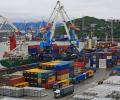
The escalating trade war between the US and China is expected to benefit Indian exporters in increasing their shipments to the American market, according to experts. Federation of Indian Export Organisations (PTI) President S C Ralhan said that imposition of higher tariffs by the US on China will shift demand towards India, which exported goods worth Rs 86 billion to the US in 2024-25.

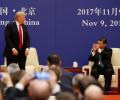
US President Donald Trump concluded his Beijing summit with Chinese President Xi Jinping, describing it as 'incredible' and highlighting 'fantastic trade deals' and a 'very strong' relationship between the two leaders.

US President Donald Trump received a red carpet welcome in Beijing for talks with Chinese President Xi Jinping on trade, the Iran war, and other key issues. The visit underscores the importance both nations place on their relationship amid ongoing tensions.

US President Donald Trump and Chinese President Xi Jinping met in Beijing to discuss a range of issues, including trade frictions and the war in Iran.
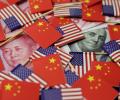
The trade war between the US and China is expected to benefit Indian exporters in increasing their shipments to the American market, sources said. They said the country was the fourth-largest gainer when the US imposed higher duties on Chinese goods during US President Donald Trump's first tenure.

Donald Trump says several issues were settled during the final day of talks with Xi Jinping covering trade, tariffs, and diplomacy.

Indian benchmark equity indices, Sensex and Nifty, saw gains in early trade, driven by strong performance in banking shares and positive sentiment from Asian markets, alongside optimism surrounding the ongoing US-China Summit.

US President Donald Trump met with Chinese President Xi Jinping in Beijing to discuss trade, technology, Taiwan, and the Iran war. Xi Jinping said that 2026 will be a 'historic, landmark year' for China-US relations.

The US-China rapprochement, however tenuous, is not without implications for India. Both China and Pakistan have become closer to the US, notes Ambassador T P Sreenivasan.

If Iran and Oman choose to charge a fee for rendering services to vessels using their territorial waters, so be it. The US is indulging in an irrationally self-destructive act, notes Ambassador M K Bhadrakumar.

The US has seized an oil tanker, 'Skywave', linked to Iran in the Indian Ocean, as part of efforts to disrupt Iran's oil shipments and enforce sanctions. The vessel was part of a network transporting sanctioned Iranian crude oil, with the seizure occurring amid heightened tensions between Washington and Tehran.

Chinese President Xi Jinping warned US President Donald Trump that mishandling the Taiwan issue could trigger conflicts between the two countries during wide-ranging talks on trade, Iran, and energy security.
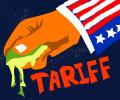
A trade deal makes sense only if it is fair and reciprocal. If the cost is strategic dependence or loss of policy space, waiting is the wiser option, asserts Ajay Srivastava.

Russian President Vladimir Putin is set to visit China for talks with Chinese leader Xi Jinping, shortly after US President Donald Trump's visit to Beijing. The visit underscores the close strategic ties between China and Russia amid global tensions.
US President Donald Trump and Chinese President Xi Jinping began a crucial two-day summit in Beijing on Thursday, with both leaders signalling a desire to stabilise relations between the world's two biggest economies despite deep disagreements on trade, Taiwan, technology and security issues.

A new report suggests China's maritime vulnerability lies in the Strait of Hormuz, not Malacca, creating strategic competition in the Indian Ocean.
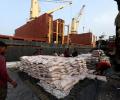
The country's exports rose 1.87 per cent to $38.5 billion in December 2025 despite global economic uncertainties, though an increase in imports led to a marginal widening of the trade deficit to $25 billion.

Amid US-China trade tensions and economic vulnerabilities, India must seize the 'China +1' opportunity, deepen reforms, secure FTAs, and globalise its firms for long-term growth, suggests Ajay Shah.

China has called on Iran to reopen the Strait of Hormuz and expressed appreciation for Tehran's commitment not to develop nuclear weapons, a key demand of the US to end the conflict.

'It was diminishing even before Trump came to power.' 'The US was at the centre of the global economy. That position is going to become less and less important and less central.'

There are enough people at the top decision-making level in Tehran who are still willing to negotiate, provided Trump can create the right setting for the negotiation to acquire a dynamic of its own, points out Ambassador M K Bhadrakumar.

Among Sensex firms, Bharti Airtel, Reliance Industries, Eternal, State Bank of India, Tata Steel and HDFC Bank were the major gainers. However, Kotak Mahindra Bank, Bharat Electronics, Infosys and Bajaj Finance were among the laggards.

'If we play our cards right, we may even benefit from the competition between the US and China as seen from increased investment from each of these countries into India.' 'The size of our market gives us an important lever of power which we shall have to play adroitly and intelligently,' points out Ambassador Gautam Bambawale -- who served as India's envoy to China -- in the Professor V M Dandekar Memorial Lecture 2019, delivered on March 8, 2019 in Pune.

Trump made the announcement in response to what he described as China taking "an extraordinarily aggressive position on trade" by sending "an extremely hostile letter to the world."

The US is the largest consumer of gems and jewellery in the world contributing nearly 40 per cent of global production. If India can tap the opportunity, its overall exports to the US could jump by 10 per cent to $ 11 billion this year.

Gold prices dropped by Rs 4,100 to Rs 121,800 per 10 grams in the national capital and slipped below $4,000 an ounce in the global markets on Tuesday as easing US-China trade tensions dampened safe-haven appeal. According to the All India Sarafa Association, the precious metal had closed at Rs 125,900 per 10 grams on Monday.

Firm is conducting feasilbility studies on setting up units in 40 countries, will take final call based on global fallout of trade spat.
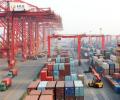
The study, 'Trade and trade diversion effects of United States tariffs on China', shows that the ongoing US-China trade war has resulted in a sharp decline in bilateral trade, higher prices for consumers and trade diversion effects -- increased imports from countries not directly involved in the trade war.

The BSE gauge Sensex fell 73.88 points to 35,548.26 and the NSE Nifty slid 17.85 points to 10,799.85, taking cues from tumbling global shares.

This is a high-stakes strategic conflict between a power which wants to preserve the status quo in its favour and one which wants to usurp that throne. The rest is all theatre, says Harsh V Pant.
'India has an advantage because we produce more cotton and we have more workforce.'

The US and China have sparred over the origin of the virus for days, with a Chinese official promoting conspiracy theories.

Among Sensex firms, Tata Motors, Infosys, Hindustan Unilever, Power Grid, Bharat Electronics, ITC, UltraTech Cement and Tata Consultancy Services were the major laggards. However, Adani Ports, Bajaj Finance, Bajaj Finserv and Axis Bank were among the gainers.

Equity market investors would track global trends, foreign fund movement and quarterly earnings in a holiday-shortened week ahead, analysts said. Stock exchanges BSE and NSE will conduct a special Muhurat trading session on Tuesday, October 21.

The 40 per cent trans-shipment tariff by the US will create major compliance issues for companies in India and the ASEAN region, with high risks for sectors like machinery, electrical equipment and semiconductors, Moody's Ratings said on Tuesday. In July 31, US President Donald Trump announced a 40 per cent tariff on goods deemed to have been transshipped, beyond the broader country-level tariffs.
Among Sensex firms, Trent, ICICI Bank, Tech Mahindra, Bajaj Finserv, Mahindra & Mahindra, Power Grid, Tata Consultancy Services and Bajaj Finance were the major laggards. However, Tata Steel, Larsen & Toubro, State Bank of India, Kotak Mahindra Bank were among the major gainers.
